

My mother did not become strong all at once. She became strong the way stone is shaped—under pressure, over time, with forces that would have broken something less determined.
“I wanted to be the best mother,” she once told me. Not casually, not as a passing thought, but as something rooted deep inside her—like a vow she made long before she understood the cost. “The best mother. The best wife.”
Those words had been poured into her early, taught as truth, as duty, as identity. To be a good woman meant staying. It meant enduring. It meant honoring biblical vows no matter what those vows demanded in return.
So she stayed.
She stayed in a marriage that was unraveling from the inside out. She stayed when things didn’t make sense, when love didn’t look like love, when truth was something hidden behind closed doors. She stayed because she believed that’s what good women did. Good God fearing women didn’t leave - no matter the cost.
Until the day everything collided.
Her father—my grandfather—saw what she could not yet allow herself to see. He had lived enough life to recognize the quiet kind of suffering that becomes permanent if you let it. And he told her plainly: You have to leave. The same man who had instilled the law behind “til death do us part”, was demanding she leave her marriage.
But leaving wasn’t simple. Leaving meant betraying everything she had been taught to believe about loyalty, about God, about marriage.
She resisted.
And in that resistance came one of the most defining moments of her life—violent, chaotic, unforgettable. A line was crossed in that room by her Father that could never be uncrossed. His temper unleashed on her the same way it had since she was a child.
Something in her shifted.
“I’ve been here before,” she said. “I’m not doing this again. I have a baby to take care of.”
That baby was me.
And just like that, survival became louder than obedience.
What followed was not a clean escape. It was messy, uncertain, and stripped down to the bare essentials of existence.
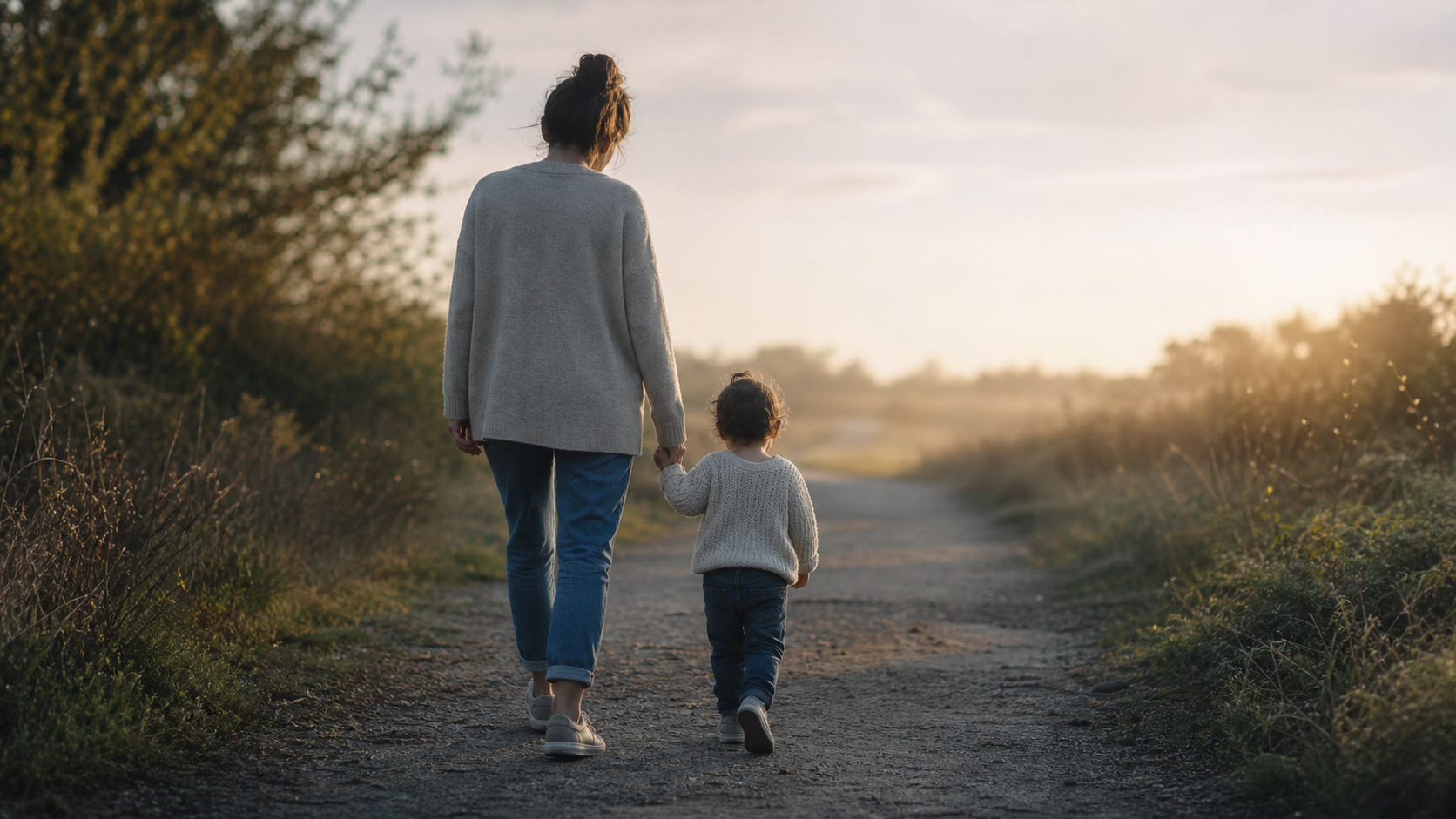
She left with almost nothing—just clothes, a car, and a child in her arms.
Everything else had to go.
Furniture sold. Stability gone. A life dismantled piece by piece. She has said before she doesn’t even remember how we got from one place to another. Trauma has a way of blurring the logistics while sharpening the feeling.
But she remembers the kindness.
“The people from the church,” she said, “they were like angels.”
In the middle of collapse, there were still hands reaching out. Still moments of grace.
My father was unraveling in his own way.
This was the first of many hospital stays. The first of many suicide attempts. The first occurrence of what would become routine financial collapse. The first secrets coming to the surface—truths that had been buried under expectation and fear.
When the doctors finally spoke plainly, it was both devastating and clarifying.
“He’s a broken human being,” one of them told her.
And then, quietly but firmly: “You need to take your baby and leave.”
This time, the message landed.
Not because it was easier to hear—but because something inside her had already begun to change.
Still, leaving didn’t mean the pain ended.
There were confrontations that shattered whatever illusion remained. One moment in particular stayed with her forever—sitting at a table, looking directly at the man she had built her life around, and asking a question that would change everything.
“Are you gay?”
“Yes,” he answered.
Truth, finally. But truth doesn’t come without consequence.
She reacted the only way her overwhelmed, shattered heart knew how—she struck him. Not out of cruelty, but out of the collision between betrayal, confusion, and a life that suddenly made no sense.
In that moment, everything she thought she understood about her marriage, her role, her future—it all fell apart.
What makes her story remarkable is not that these things happened.
It’s that she did not break under them.
She could have.
By every reasonable expectation, she should have.
She was young, alone, financially unstable, emotionally overwhelmed, and carrying the responsibility of a child while navigating circumstances most people never face all at once.
But she held it together.
Not perfectly. Not without scars. But she held it together.
“I don’t know how I didn’t break,” she once said.
But I do.
Because somewhere along the way, her definition of being “the best mother” changed.
It stopped being about being the perfect wife.
It stopped being about meeting expectations placed on her by others.
It became about survival.
About protection.
About choosing her child—even when it meant losing everything else.
Years later, when we sat together reflecting on all of it, I told her something she had never fully allowed herself to believe:
“You have been an incredible mother.”
Not because everything was easy.
Not because everything was ideal.
But because in the face of chaos, she chose to stay present. She chose to keep going. She chose to love.
And that kind of motherhood—the kind forged in fire, in uncertainty, in sacrifice—is not something you learn from a book or inherit from tradition.
It’s something you fight for.
My mother spent much of her life wondering if she had done enough, if she had done it right.
But what she didn’t always see—what she couldn’t always feel—was this:
She didn’t just survive her story.
She changed mine.
💎 🌾 💎
Join us in impacting lives across the 10/40 window—your gift goes entirely to this mission. Learn more in the link below.
