


A shoot will come up from the stump of Jesse;
from his roots a Branch will bear fruit.
The Spirit of the Lord will rest on him—
the Spirit of wisdom and of understanding,
the Spirit of counsel and of might,
the Spirit of the knowledge and fear of the Lord.
Isaiah 11:1–2 (NIV)
The Fruit of the Spirit’s Life
The Seven Spirits of God describe more than attributes of the Holy Spirit. They reveal a way of life. The Spirit is life itself, and true life is found in the flow of wisdom, understanding, counsel, might, knowledge, and ultimately the fear of the Lord. Isaiah tells us that the Messiah would delight in the fear of the Lord. That word delight could also be understood as pleasure. There is a pleasure found in God unlike any pleasure this world can offer.
Throughout this journey we have seen that the Spirits come in pairs. Wisdom and understanding belong together. Counsel and might belong together. Now we arrive at the final pair: knowledge and the fear of the Lord.
Knowledge, in the biblical sense, is not information stored in your head. It is intimate knowing. It is experiential. A mechanic knows cars because he has spent countless hours under the hood, behind the wheel, and immersed in the world of engines. His knowledge comes from experience, not merely information. In the same way, biblical knowledge is relational. It involves mind, body, and spirit. It is knowing through encounter.
As we’ve seen throughout this study, wisdom, understanding, counsel, and might ultimately revolve around love. Christ crucified is both the wisdom of God and the power of God. Understanding explains why we love—because we see the value of the one being loved. Counsel shows us how to love. Might empowers us to actually do it.
But the journey does not stop there. As love becomes more than a concept and begins to shape your life, you come into the knowledge of it. Yet ultimately this is not knowledge about love. It is knowledge of God himself, because God is love.
The biblical word for knowledge is even used to describe a husband knowing his wife. It is the language of intimacy. We have arrived at the crescendo of the Seven Spirits. The fruit of everything that has come before is knowing God.
And from that knowledge flows the fear of the Lord.
A Tree Bearing Fruit
One way to understand the Seven Spirits is through the image of a tree. Wisdom and understanding are the roots. Counsel and might form the trunk and branches. But knowledge and the fear of the Lord are the fruit.
Fruit is the visible outcome of a healthy tree. In the same way, intimacy with God and worship of God are the mature fruit of a life rooted in divine wisdom.
Knowledge is also closely related to revelation. Revelation is seeing something that was previously hidden. It is not merely learning information but receiving sight. I’ve heard intimacy described as “in-to-me-see.” While not a literal definition, it captures something important. Intimacy is the unveiling of the heart. Revelation is seeing into the heart of God.
This is why there is such a difference between someone who can argue theological facts and someone who actually knows God. One may possess information. The other carries revelation.
When I speak about the kindness of God, I am not simply quoting verses. Scripture is certainly my foundation, but those truths have become united with experience. I know something of his kindness because I have encountered it.
Knowing His Kindness
I remember one particularly tender moment.
There was a season in my life when I became deeply frustrated with God. I was facing a situation that I desperately wanted changed. It seemed as though it could change easily, and yet nothing was happening. I felt stuck. I felt like I was failing. The frustration eventually erupted into anger.
I can count on one hand the number of times I have genuinely yelled at God, but this was one of them.
I remember crying out, “What the hell do you want me to do?” The words came from a place of exhaustion and disappointment. Tears flowed. Emotions I normally kept hidden came rushing to the surface.
A few hours later, I was sitting at home feeling numb and somewhat guilty about my outburst. A movie happened to be playing. In the story, a young boy became angry with his father, yelled at him over the phone, and hung up. Later, the boy was consumed with guilt, convinced his father must be angry with him.
At the end of the film, the father unexpectedly appears and says to his son, “Even if you yell at me, I could never be mad at you. I love you so much.”
The moment those words were spoken, the presence of God flooded the room.
I knew he was speaking directly to me.
Peace washed over me. I felt his embrace. I melted.
It was the same love I encountered years earlier in a college dorm room when I was eighteen years old and far from God. In that moment his mercy met me, and it was as though he whispered, “I miss you, son. Come home.”
Those moments are not merely memories. They are revelation. They are knowledge. They are encounters with the living God.
And God desires to bring all of us into that kind of knowing.
The Knowledge That Leads to Worship
Part of walking in counsel and might is learning to receive how deeply God loves you. If wisdom is Christ crucified and power is Christ crucified, then much of the Christian life is simply learning to receive the love being poured out from the cross.
And that knowledge leads directly into the fear of the Lord.
The fear of the Lord is one of the most misunderstood phrases in Scripture. In our modern ears, fear sounds like terror. We imagine being frightened of someone who wants to hurt us or punish us. But that is not the heart of this biblical concept.
When Jesus quoted the Hebrew Scriptures, he often used language that connected fear with worship. The fear of the Lord is not about being afraid. It is about awe. Wonder. Reverence. Honor. Adoration.
Every time I have encountered the kindness of God, my reverence for him has increased. The first time I truly experienced his love, it did not make me want to sin more. It made me want to honor him.
The more you know God, the more you stand in awe of him.
Knowledge produces worship.
This is why these final two branches belong together. The deeper your intimacy becomes, the deeper your worship becomes. The more clearly you see his beauty, the more naturally your heart bows before him.
Worship is the fruit hanging from the tree.
The Circle of Light and Sound
Yet even here the journey does not end.
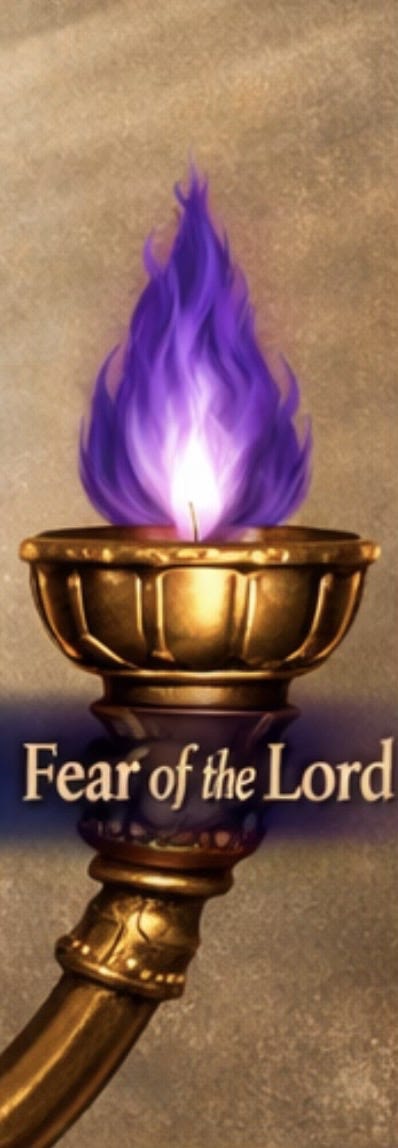
Throughout this series we have compared the Seven Spirits to the spectrum of light. Red represents the lower wavelengths and purple the highest visible wavelengths. We connected the fear of the Lord with that purple end of the spectrum—the place of majesty, mystery, royalty, and awe.
Yet the fascinating thing about worship is that it always leads us back to wisdom.
The fear of the Lord is the beginning of wisdom, Proverbs tells us.
So the highest point becomes the starting point again.
The same pattern exists in music. Western music is built around seven primary notes. When you reach the final note of the scale—“ti”—it does not feel finished. Instead, it creates a longing for resolution. It draws you back to “do,” but now at a higher octave.
The journey circles back while simultaneously ascending.
The same thing happens spiritually.
As you grow in love and intimacy with God, worship becomes more intense. His beauty becomes more overwhelming. His glory becomes more magnificent. Yet just when you think you cannot possibly go any deeper, he brings you back to the simple kindness revealed in Christ.
He brings you back to the red note of the cross.
The tree tells the same story. If knowledge and the fear of the Lord are the fruit, what is found inside fruit?
Seeds.
And those seeds begin the entire process again.
The Glory and Gentleness of God
The fear of the Lord is ultimately an awareness of God’s glory.
When Isaiah encountered that glory in Isaiah 6, he was undone. Standing before the throne, he cried out, “Woe is me! For I am ruined.” He suddenly became aware of every impurity within himself and within the world around him.
That is part of the fear of the Lord. God’s beauty reveals everything that is out of alignment.
But notice what happens next.
A burning coal is brought from the altar and touches Isaiah’s lips. His sin is removed. His guilt is taken away.
Just when Isaiah can no longer bear the weight of holiness, mercy appears.
Once again, the purple majesty of God leads back to the crimson grace of God.
This reveals one of the great mysteries of the Christian faith. God is infinitely powerful, unimaginably holy, and terrifyingly beautiful. Yet at the same time, he is the safest being in the universe.
Creation itself teaches this paradox. God created babies, puppies, and newborn chicks. Why? Because he wanted to reveal something of his tenderness. These tiny creatures radiate innocence, vulnerability, and sweetness.
But God also created oceans, hurricanes, jaguars, black holes, and galaxies. These reveal something else about him. They remind us that he is wild, majestic, powerful, and utterly beyond our control.
Both revelations are true.
The Lamb and the Lion are one.
The purple majesty of God is forever joined to the crimson blood of Christ.
Beholding His Beauty
If there is one passage that beautifully captures the Spirit of Knowledge and the Fear of the Lord, it is Psalm 27.
David writes:
“One thing I have desired of the LORD, that will I seek: that I may dwell in the house of the LORD all the days of my life, to behold the beauty of the LORD…” (Psalm 27:4)
David’s greatest desire was not success, victory, wealth, or influence. He wanted to behold beauty.
He wanted to know God.
This is the Spirit of Knowledge.
The Hebrew word translated beauty is no’am. It can refer to beauty, but it also carries the ideas of sweetness, pleasantness, delight, and kindness. It was even used to describe honey. David longed to gaze upon the sweetness of God.
And when we behold that sweetness, honor naturally follows. Reverence naturally follows. Worship naturally follows.
This is why the fear of the Lord cannot be separated from the knowledge of God. The more clearly we see his kindness, the more deeply we trust him. And perhaps that is one of the greatest truths about the fear of the Lord:
You honor God by trusting him.
The Israelites saw the mighty deliverance of God at the Red Sea, and Scripture says they feared the Lord and put their trust in him. Their fear expressed itself as confidence.
They saw his goodness, and they trusted his heart.
That is worship.
That is the fruit of intimacy.
And that is the destination of the Seven Spirits: a life rooted in love, growing in love, overflowing in love, and ultimately beholding the beauty of God with awe, delight, and wonder forever.
💎 🌾 💎
Join us in impacting lives across the 10/40 window—your gift goes entirely to this mission. Learn more in the link below.